Last updated November 21, 2026
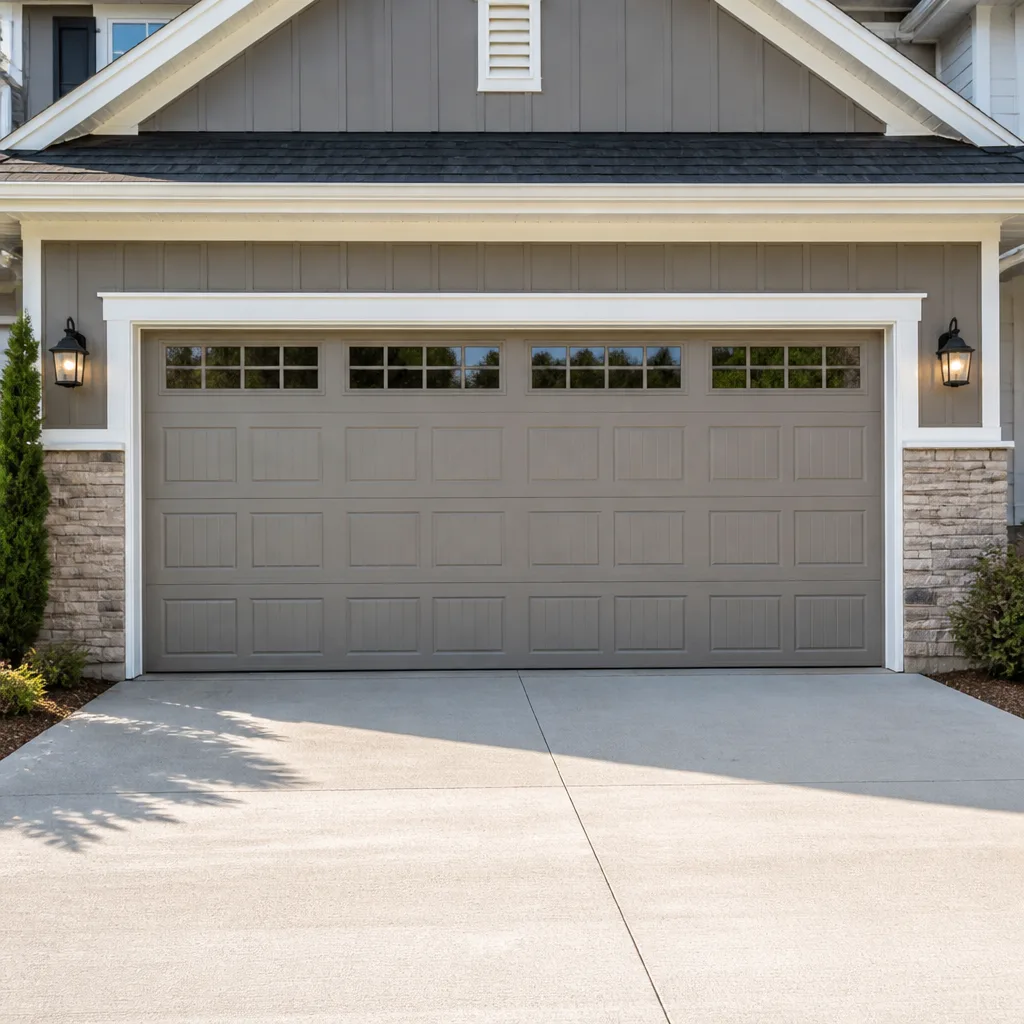 Raised-panel steel
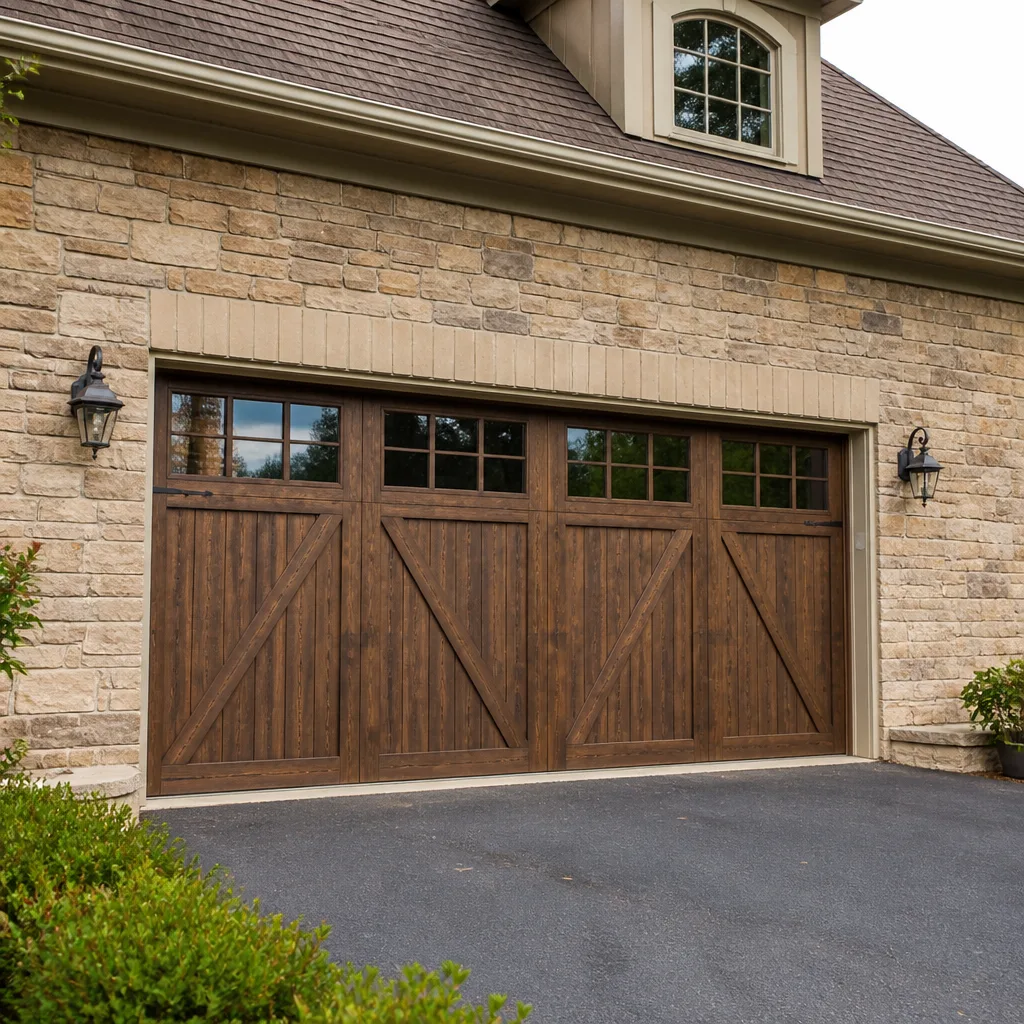 Carriage house
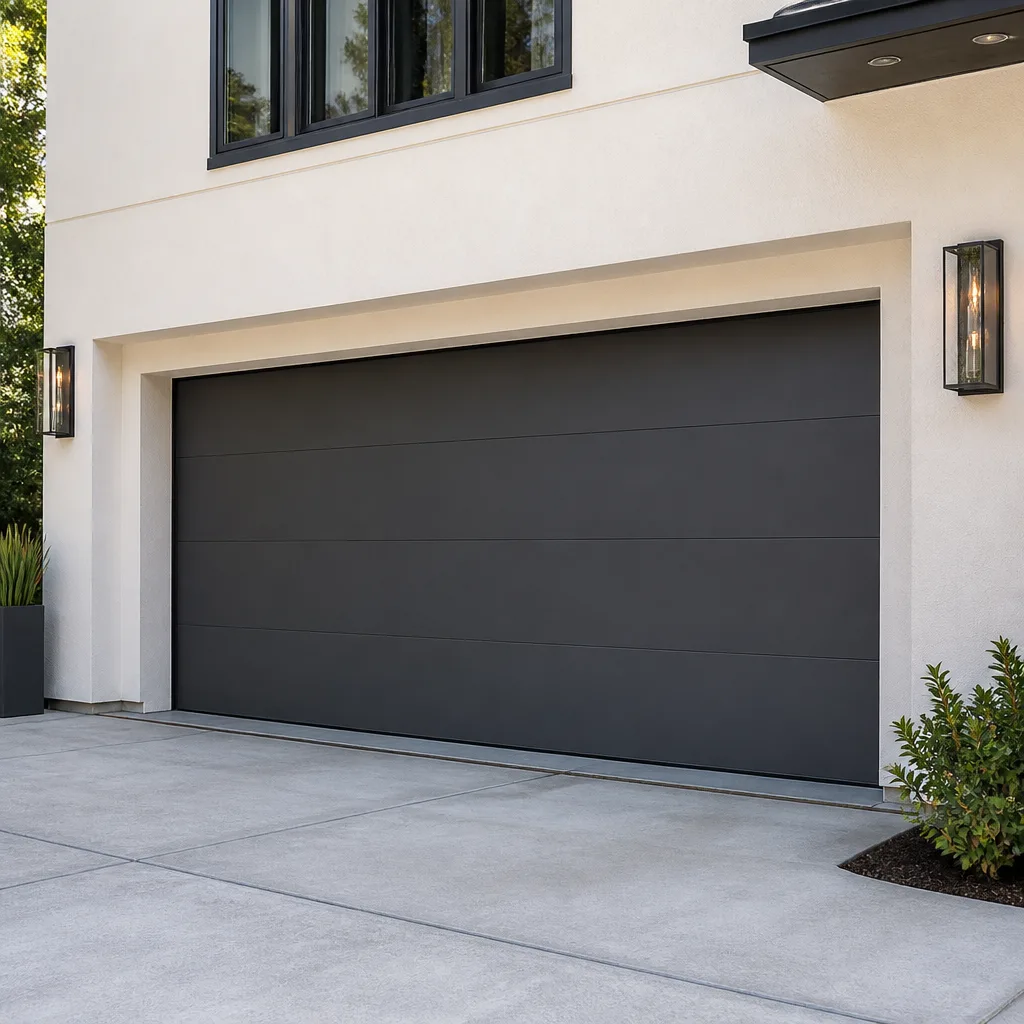 Modern flush
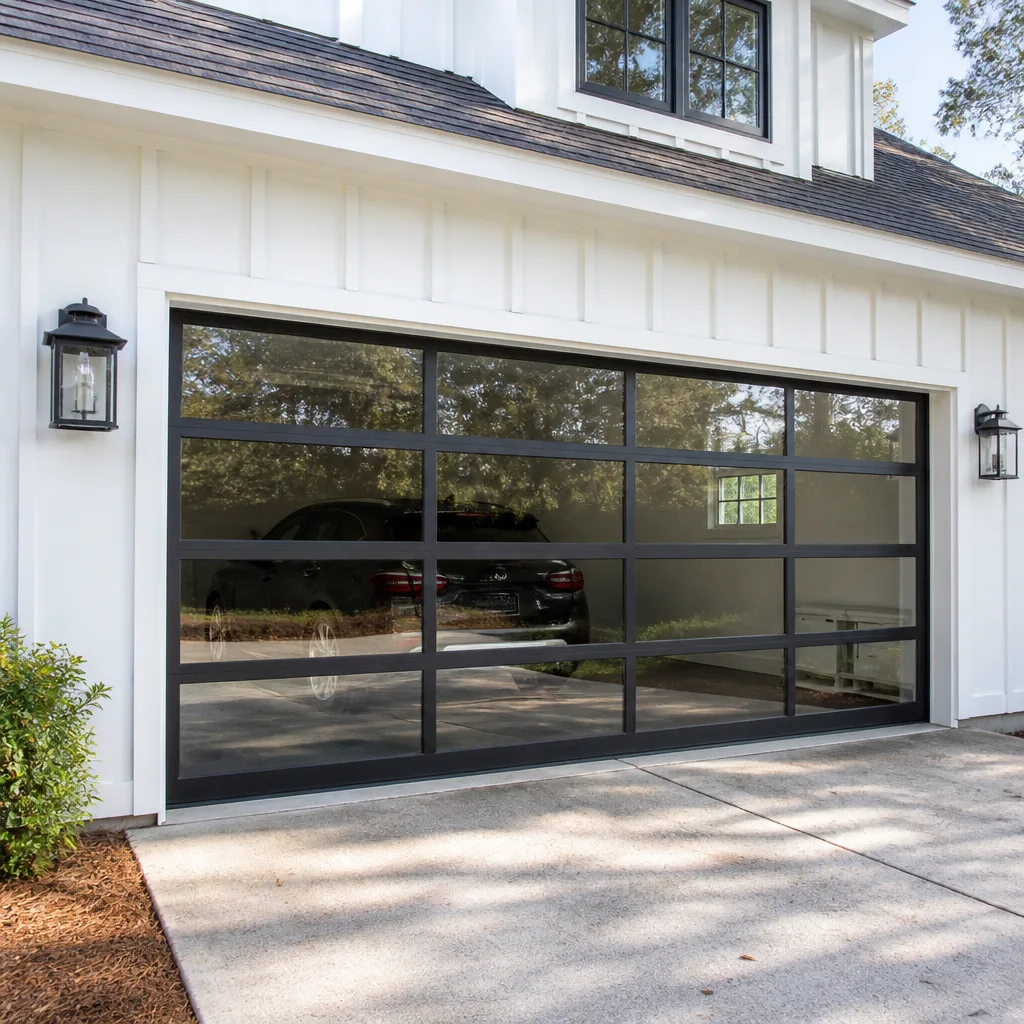 Full-view glass
 LiftMaster openers
 Chamberlain openers
Full 25-point door and opener safety check with every visit - springs, cables, rollers, tracks, and your LiftMaster or Chamberlain opener included
You get a price before we start. It does not change when the pro arrives.
Get your free estimateThe Complete Guide to Garage Doors in Eagan
Most garage door advice you’ll find online was written for a climate that isn’t yours. It talks about humidity, salt air, or mild winters, and then it tells you to pick a door based on color and curb appeal. That works in a lot of places. In Eagan, it doesn’t. This city sits in USDA Hardiness Zone 4b, where the temperature swings more than 100°F between a January cold snap and a July afternoon. That range rules out some door materials and opener setups that hold up fine in gentler parts of the country.
This guide is written from Eagan, for Eagan. We’ll cover how the freeze-thaw cycle changes what you should buy, how the city’s HOA-heavy developments limit your choices, how to read the rating plate on your door, and when a panel swap stops making sense. If you’ve ever wondered why the same door that lasts twenty years somewhere else wears out faster here, this is for you.
Quick Answer
The best garage door for an Eagan home is an insulated steel door with a heavier gauge face and a proper thermal break, paired with a belt-drive opener sized to your door’s weight. Steel handles the freeze-thaw cycle better than wood, and gauge matters more than finish in this climate. Before you buy anything, check your HOA’s design rules and read your door’s rating plate so a replacement matches both your subdivision and your wind load requirements.
Styles & brands we work with
- Raised-panel steel
- Carriage house
- Modern flush
- Full-view glass
- LiftMaster openers
- Chamberlain openers
Table of Contents
- Why Eagan’s Climate Makes Garage Doors Different
- Choosing a Material That Survives the Freeze-Thaw Cycle
- HOA Rules in Eagan: What You Can and Can’t Install
- Opener Compatibility with Eagan’s 1990s – 2010s Homes
- How to Read Your Rating Plate and Wind Load Requirements
- Panel Swap or Full Replacement: The Age Threshold
- Seasonal Maintenance That Pays Off in Eagan
- Springs, Cables and the Safety Rules That Matter
Why Eagan’s Climate Makes Garage Doors Different
Eagan’s temperature spread is the single biggest factor in how long a garage door lasts here. Zone 4b means winter lows that can plunge past -25°F and summer highs that climb into the upper 90s. That’s a swing of more than 100°F across the year, and your door goes through a smaller version of it every single day in the transitional months.
What that does to a door is physical. Metal expands in the afternoon sun and contracts overnight. Seals that were pliable in October turn brittle by January. Lubricant thickens in the cold and quits doing its job. Hardware works loose a little at a time, and by spring a door that ran quietly in the fall starts to rattle or bind.
The Eagan side of this is the freeze-thaw cycle at the door opening itself. Snow melts off the car, runs toward the threshold, and refreezes overnight. That ice creeps into the gap under the bottom seal and works at it from the inside. It also gets under the concrete apron in front of some older driveways, and once water has a place to sit, the ice does the rest.
What this means for you:
- Seal condition matters as much as panel condition in Eagan. A worn bottom seal lets cold air and meltwater in all winter.
- Insulation isn’t just comfort. An insulated door reduces condensation on the inside face, and condensation is what drives rust on cheaper steel doors.
- Hardware inspection should happen before the first hard freeze, not after something breaks.
- A door that’s out of balance in fall will be worse in winter, when cold grease and stiff rollers add friction.
We’ve seen the same pattern on the equipment in Eagan homes for years. The doors that last are the ones whose owners treat the change of season as a maintenance prompt. When something does go wrong, our Eagan Garage Door Repair team handles both the diagnosis and the fix, because the two aren’t really separate jobs here.
Choosing a Material That Survives the Freeze-Thaw Cycle
In Eagan, the question of door material is really a question of how it survives thermal cycling. Wood, vinyl, aluminum and steel all behave differently when the thermometer swings that far, and the difference shows up as warping, cracking, denting or rust.
Here’s how the common materials actually perform in this climate:
- Steel: The default for good reason. It holds its shape through the swings, and modern insulated steel doors handle both the cold and the summer heat without moving. The catch is that gauge matters more than finish. A 24-gauge face resists dents far better than a thinner 27- or 28-gauge face, and in a place with hail and heavy snow sliding off roofs, that shows. Finish protects against rust, but a thin panel that dents easily will look worn long before the paint fails.
- Wood and wood composite: Beautiful, and demanding here. Wood absorbs moisture and moves with it, so a wood door in Eagan needs consistent sealing and refinishing to survive. Skip a year and the freeze-thaw cycle starts working at the joints.
- Aluminum: Light and rust-resistant, which is a real advantage. It dents more easily than steel, so it’s a better fit for a sheltered opening than one taking snow and hail.
- Vinyl and composite: Won’t rust and handles moisture well. The trade-off is that some vinyl panels get brittle in extreme cold, so check the cold-weather rating before you buy.
The practical takeaway for an Eagan buyer: pick steel, and look at the gauge before the color chart. Whether the door comes from Clopay, Amarr, Wayne Dalton or Raynor, ask what gauge the face panel is and whether the door has a thermal break between the inner and outer skins. Those two specs do more for longevity in Zone 4b than any finish upgrade will. Insulation value between the panels helps too, because a warmer door is a drier door.
And here’s the part people underestimate: an insulated door weighs more. If you’re upgrading from a thin uninsulated panel, your existing opener may not be sized for the new door. That’s a conversation to have before the purchase, not after.
HOA Rules in Eagan: What You Can and Can’t Install
Eagan has a lot of planned development, and that shapes garage door decisions in a way most national guides never mention. Subdivisions along the Lexington-Diffley corridor and the newer developments toward the Lakeville border often carry architectural controls written into the association rules. Those controls regularly reach the garage door.
What HOAs in Eagan commonly restrict:
- Style: Raised-panel versus carriage-house versus flush, sometimes down to the panel layout. A door that looks great in the showroom can be a violation if it doesn’t match the approved design for the subdivision.
- Color: Approved palettes, often earth tones, white or a specific almond. Painting a door a color that isn’t on the list is one of the most common compliance problems.
- Window configuration: Some associations require windows in a certain panel position, or prohibit certain glass styles that reflect light differently across neighboring homes.
- Materials: A few rules specify the door material, or require the finish to match the approved color regardless of what material you choose.
Here’s the step-by-step approach we recommend before you order anything:
- Pull your association’s design guidelines and read the section on garage doors. Don’t rely on what a neighbor said.
- Submit an architectural request with the model number and color, even if you think it’s obviously compliant. Approval in writing saves a problem later.
- Ask the door supplier for finish samples so you can compare against a physical standard rather than a screen.
- Wait for written approval before the door is ordered, because most suppliers build to order and won’t take back a special color.
If you’re unsure which door models fit your subdivision rules, call us and we’ll talk through the options that work for your home. When you’re ready to move, our garage door repair team can also assess whether your current door can be brought into compliance with a repair or a panel match rather than a full replacement.
Opener Compatibility with Eagan’s 1990s – 2010s Homes
Eagan’s housing stock tells you a lot about what your opener can and can’t do. Homes built through the 1990s and 2000s boom often have garage ceilings that are lower or less predictable than what was standard in earlier decades, and the wiring and header clearance in those garages were built around the doors available at the time. Replacing just the opener without checking those realities is how people end up with a new unit that doesn’t fit.
Three things to check before you buy an opener for an Eagan home:
- Header clearance: The distance between the top of the door and the ceiling. A taller door needs more of it, and a low-ceiling garage may need a low-profile or wall-mounted opener rather than a conventional rail unit.
- Ceiling height: Some newer homes have finished garages with soffits or storage racks that eat the space a standard opener needs.
- Wiring and power: Where the outlet sits and whether the existing safety sensor wiring is reusable. Older setups sometimes have wiring that won’t support a modern unit’s sensors without a run.
Brand matters here too, but not in the way you might think. The opener needs to be matched to the door’s weight and travel, and the door needs to be matched to the tracks and springs already in the garage. LiftMaster and Chamberlain openers are both common in Eagan homes and both have good options for a variety of door weights. Genie units show up in a lot of older installations and are worth repairing rather than replacing when the problem is a sensor or a gear. The trick is to match the opener to the door, not to pick whatever’s on sale.
That’s the advantage of an opener specialist that knows the major brands. We work on your brand rather than steering you toward one manufacturer, so the recommendation is driven by your door’s weight, your ceiling and your wiring. For opener-specific problems, our garage door opener repair page goes deeper into the diagnosis side.
How to Read Your Rating Plate and Wind Load Requirements
Every production garage door carries a rating plate or label from its manufacturer, and almost nobody reads it. That plate tells you the door’s model, the wind load it was built to meet, and often the weight and spring information. In a wind-prone region, it’s the single most useful piece of information on the door.
Here’s what to look for and what it tells you:
- Model number: Lets you match replacement panels or a full door exactly to the original design.
- Wind load or design pressure rating: The door was engineered for a specific lateral pressure. A replacement should meet or exceed it, not fall below it.
- Door weight: Determines spring size and opener capacity. Guessing here is how doors get mismatched springs and openers that struggle.
- Safety label: The warning sticker isn’t decoration. It identifies the door’s construction and the risk of the torsion system inside.
How to cross-reference your door against Minnesota’s residential wind load requirements, step by step:
- Photograph the rating plate before anything blocks it. Write down the model and the wind rating.
- Ask your city’s building department what the current residential wind load requirement is for your address. Requirements vary by location and can change over time, so the current rule matters more than what was in place when your home was built.
- Compare your door’s rated pressure to that requirement. If the door is rated below it, that’s a reason to look at a replacement rather than a repair.
- When you order a replacement, ask the supplier for documentation showing the new door meets or exceeds the requirement. Read the paperwork, not just the sales pitch.
If you’re not sure what your plate says, we can read it for you and tell you whether a repair keeps you compliant or a replacement makes more sense.
Panel Swap or Full Replacement: The Age Threshold
The decision between a panel swap and a full replacement comes down to age, damage type and parts availability. A single dented bottom panel on a recent door is a fast, straightforward swap. A door that’s 15 years old with two bad panels, worn rollers and springs near the end of their life is a different calculation.
Here’s how the math usually breaks down:
- Under 8 to 10 years old: A panel swap usually wins if the panels are still available and the hardware is in decent shape. Matching color and style is easier while the model is still in production.
- Around 12 to 15 years old: This is the threshold. A single panel swap can still make sense, but a second round of repairs is where replacement starts to win. Springs, rollers and cables wear at different rates, and one repair often reveals the next.
- Past 15 years: Replacement usually makes more financial sense than repeated panel swaps, especially if the door is also hard to match for color or has a weaker wind rating than the current requirement.
One Eagan-specific factor in this calculation: an HOA-approved door on an older home may now be hard to match in a repair. If the association has updated its rules since your door was installed, a repair that keeps the old look could become a compliance question anyway. That pushes the balance toward replacement earlier than it would elsewhere.
We won’t tell you to replace a door that just needs a panel. The recommendation follows the equipment, not the invoice. If a panel swap is the honest answer, that’s what we’ll quote; when you want the full picture, our garage door repair team can walk you through both options.
Seasonal Maintenance That Pays Off in Eagan
A little maintenance before the hard freeze saves a lot of repair cost by spring. The freeze-thaw cycle rewards homeowners who get ahead of it, and most of the work is simple enough to do without a technician.
Here’s the seasonal routine that pays off in an Eagan garage:
- Fall, before the first freeze: Test the balance. Disconnect the opener and lift the door halfway by hand. If it won’t stay put, the springs are out of adjustment and a pro should look at them.
- Lubricate: Apply a garage-door-rated lubricant to the rollers, hinges and springs. Cold weather thickens ordinary grease, so the right product matters.
- Check the bottom seal: Run a hand along the inside of the door where it meets the floor. A seal that’s cracked or flat lets in snowmelt that refreezes under the door.
- Test the safety reversal: Put a block of wood in the door’s path and close it. The door should reverse. If it doesn’t, the sensors or opener need service.
- Tighten hardware: After the seasonal shifts, check the hinges and bolts. Loose hardware turns into a noisy, binding door by February.
- Spring, after the thaw: Check the tracks for grit and ice damage, and wipe out the rails. A door that starts the warm season clean runs quieter all summer.
The one part you should not service yourself is the springs. Torsion springs store enormous energy, and even with the door down they’re under tension. A mistake there is a serious injury risk, and it’s not a job for a homeowner with a wrench and a video. Our garage door spring repair team handles that work with the safe tools and the training for it, which is why spring work is a core service here rather than an add-on.
Springs, Cables and the Safety Rules That Matter
Springs and cables are the highest-risk parts of any garage door. Both are under heavy tension whenever the door is closed, which is most of the time. A spring can fail suddenly and a cable can snap, and both send metal in unpredictable directions. That’s why we don’t hand out repair steps for them, and why any guide that does is doing you a disservice.
What you can do safely:
- Listen: A door that bangs, creaks or feels heavier as it rises is telling you something about the springs or cables.
- Watch for a gap: A visible gap in a coiled spring means it’s already broken. Stop using the door.
- Check the cables: If either cable is frayed, kinked or hanging loose, don’t run the opener. Call a professional.
- Notice imbalance: A door that falls when lifted halfway, or one that goes crooked, needs a spring and cable inspection.
What not to do:
- Don’t try to adjust, unwind or remove a torsion spring yourself. Even a fully wound-down spring is dangerous, and reading a tutorial won’t change that.
- Don’t run an opener on a door with a broken spring. It can damage the opener or the door and put strain on the cables.
- Don’t try to force a stuck door or work around a frayed cable. Both are signs of larger trouble.
When a spring fails, it’s a repair to schedule quickly, because the door is unusable and possibly unsafe in the meantime. If you’ve lost a spring or a cable, call our emergency line and we’ll treat it as the access and safety issue it is, not as an upsell. Our technicians have up to 12 years of experience with the springs and cables on Eagan’s doors, and we use matched pairs when a door needs both. If one spring of a pair has failed, replacing both is usually the right call, because the second is the same age and under the same load. Our team won’t leave you to find a different company for the second half of the job.
Common Mistakes to Avoid
- Buying by finish instead of gauge. A nice-looking finish hides a thin panel that dents on the first hailstorm. In Eagan, gauge matters more than color for anything that needs to hold up through freeze-thaw. Ask about the steel gauge before the paint chart.
- Skipping the HOA rules. In subdivisions along the Lexington-Diffley corridor and near the Lakeville border, the wrong door style or color can be a violation. Read the design guidelines and get written approval before you order.
- Replacing the opener and not checking ceiling clearance. A new opener that doesn’t match your ceiling height or header clearance is a return trip waiting to happen. Measure the space before you buy.
- Ignoring the bottom seal. A worn seal is the entry point for the meltwater that causes winter problems. It’s a cheap part with a big effect in this climate.
- Trying to fix springs and cables yourself. The springs and cables are under serious tension and it takes a trained professional to handle them safely. No repair shortcut is worth the risk to yourself or the door.
- Panel swapping a door that’s already past its life. Past 12 to 15 years, a repair today often leads to another repair next season. Do the honest math on replacement.
- Choosing the opener by price instead of compatibility. The right opener depends on the door’s weight and the garage’s wiring, not the sale tag. A mismatched unit strains the door and wears faster.
See the difference
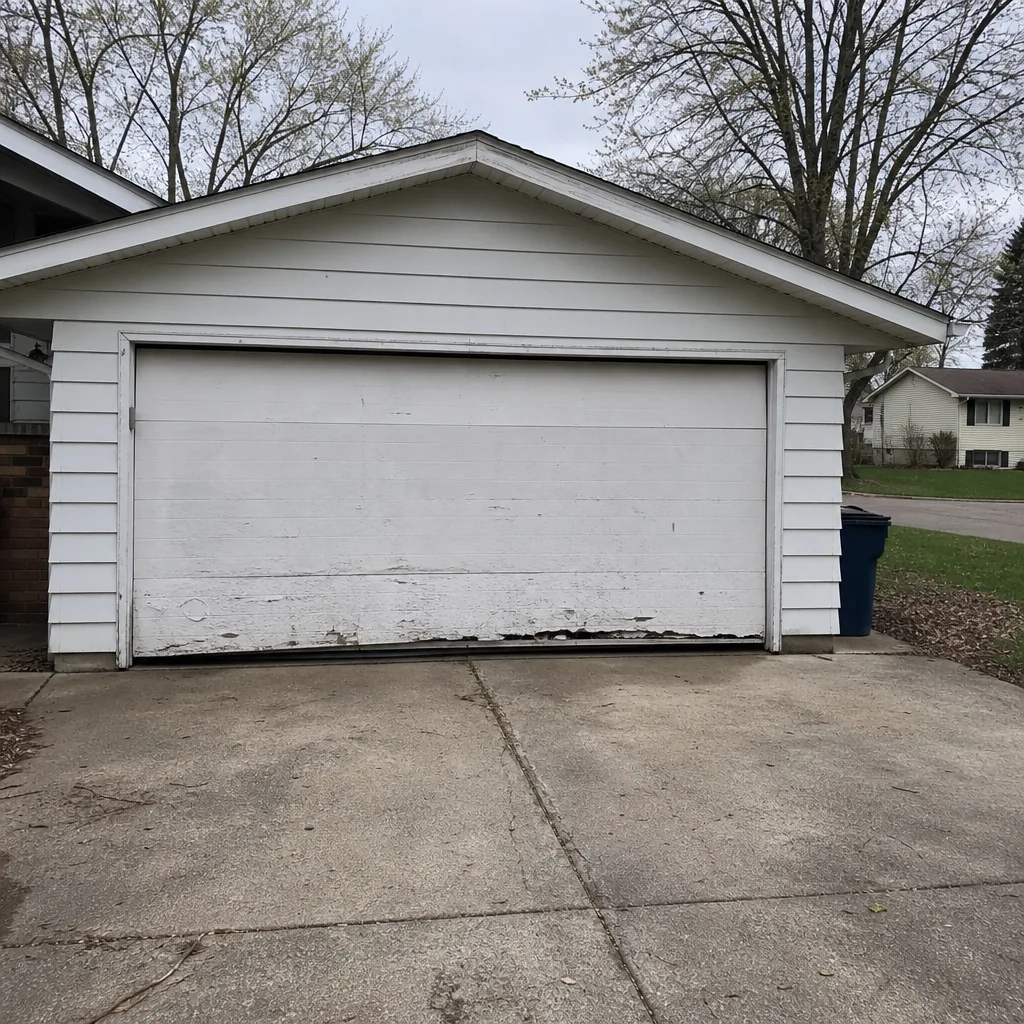 Before
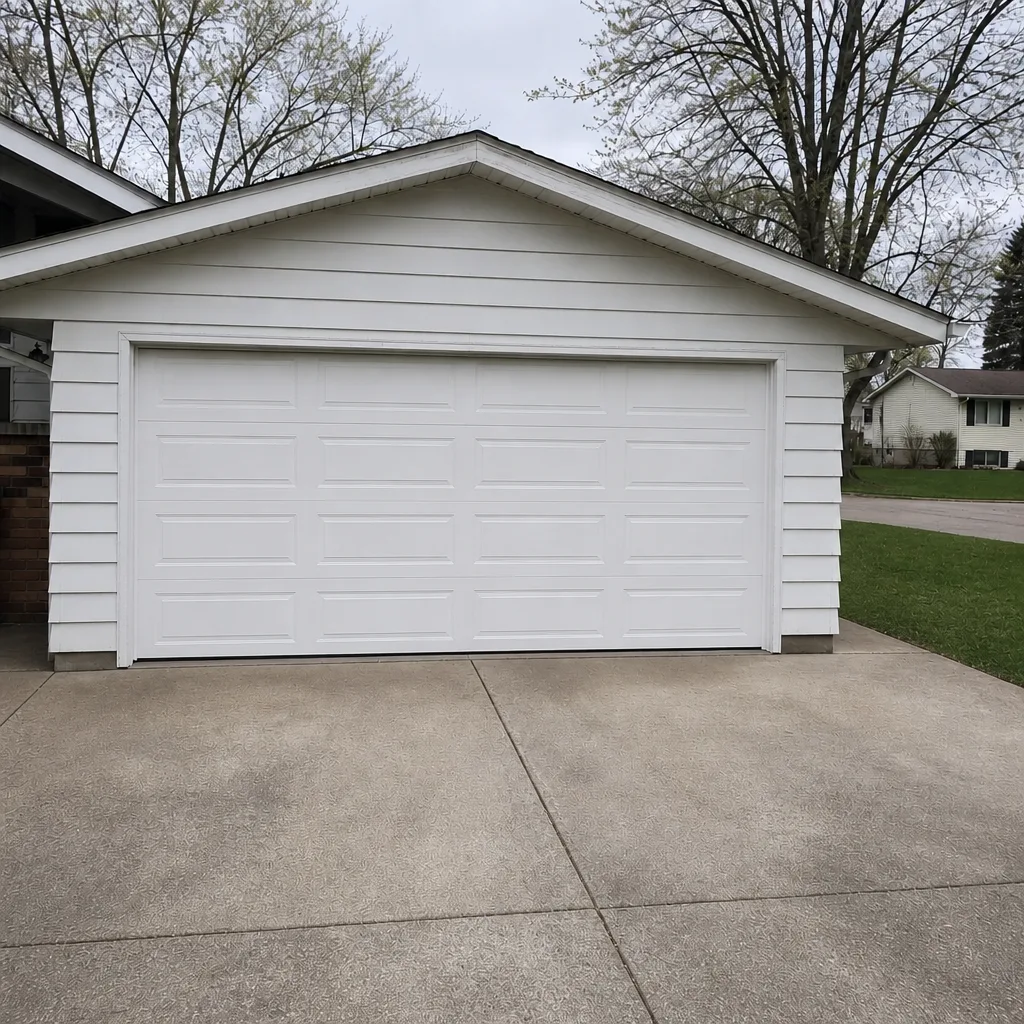 After
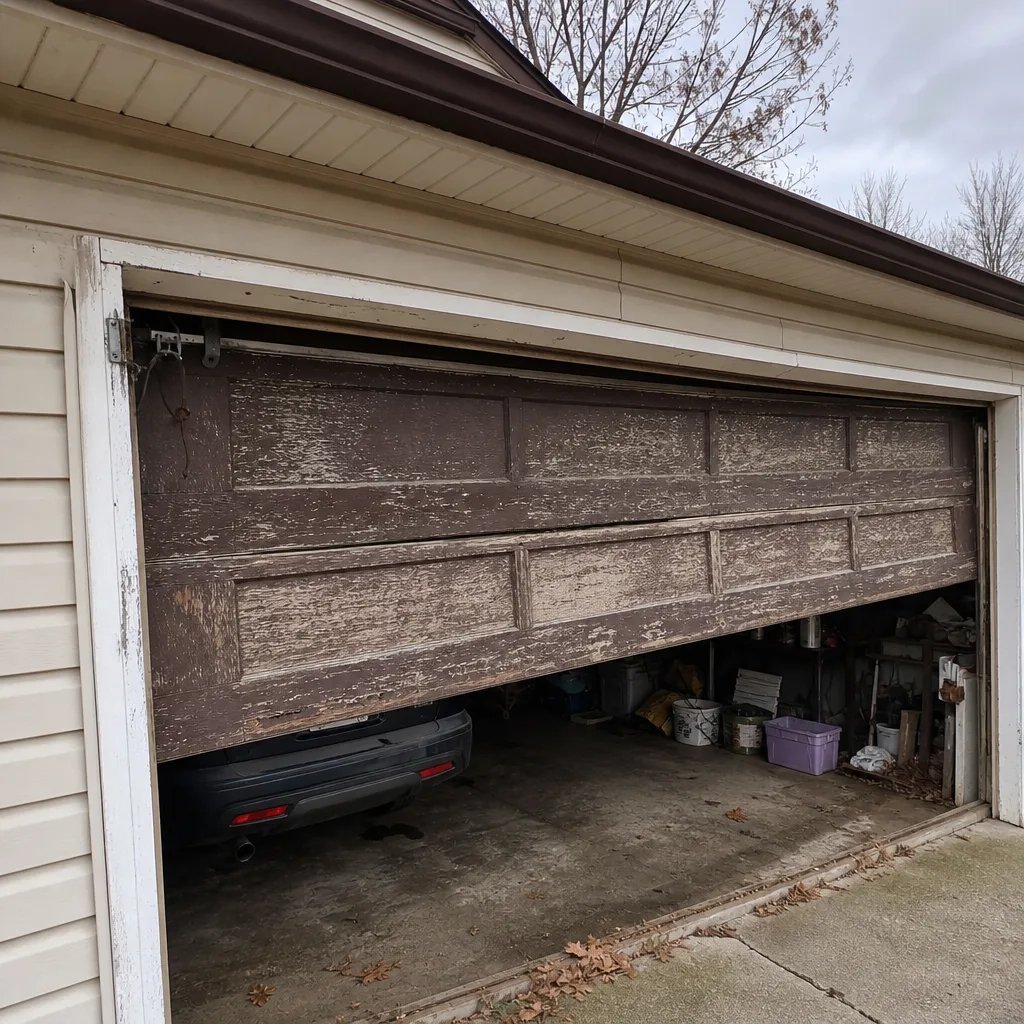 Before
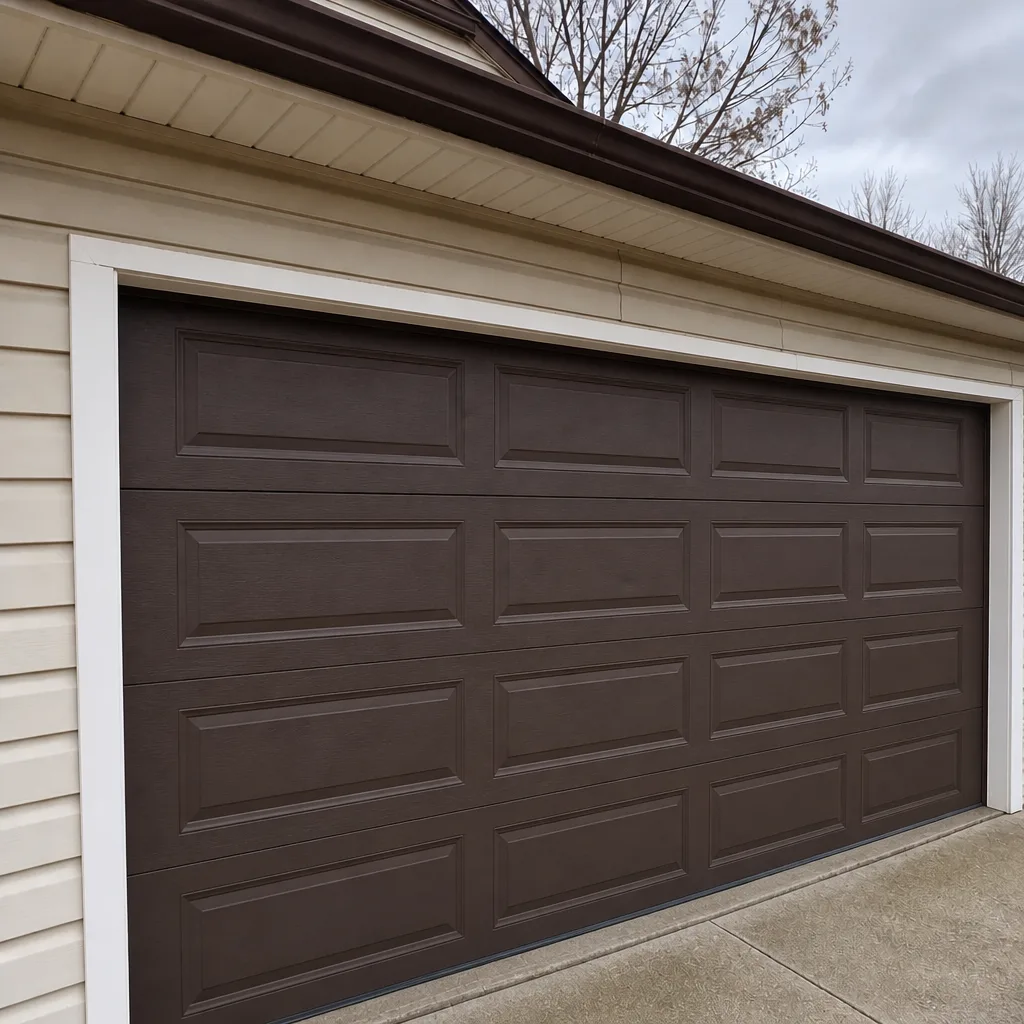 After
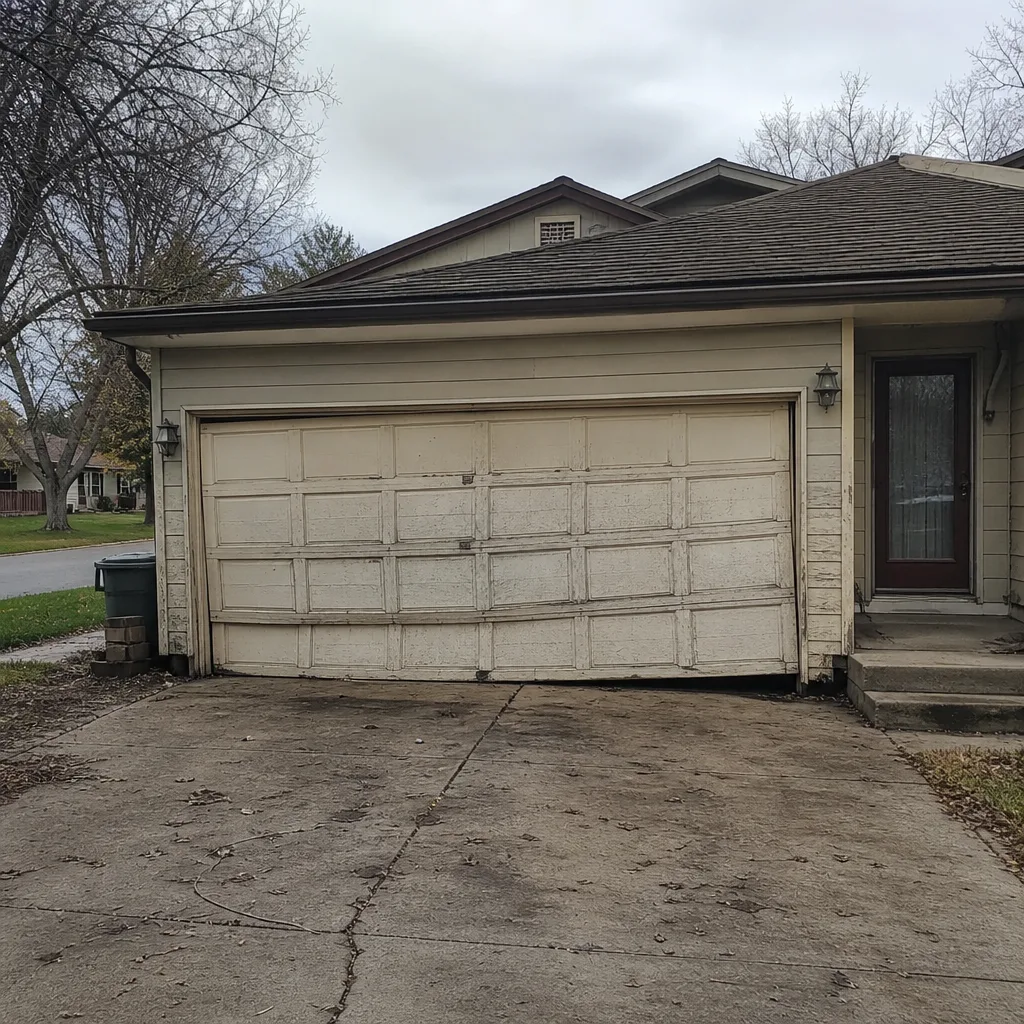 Before
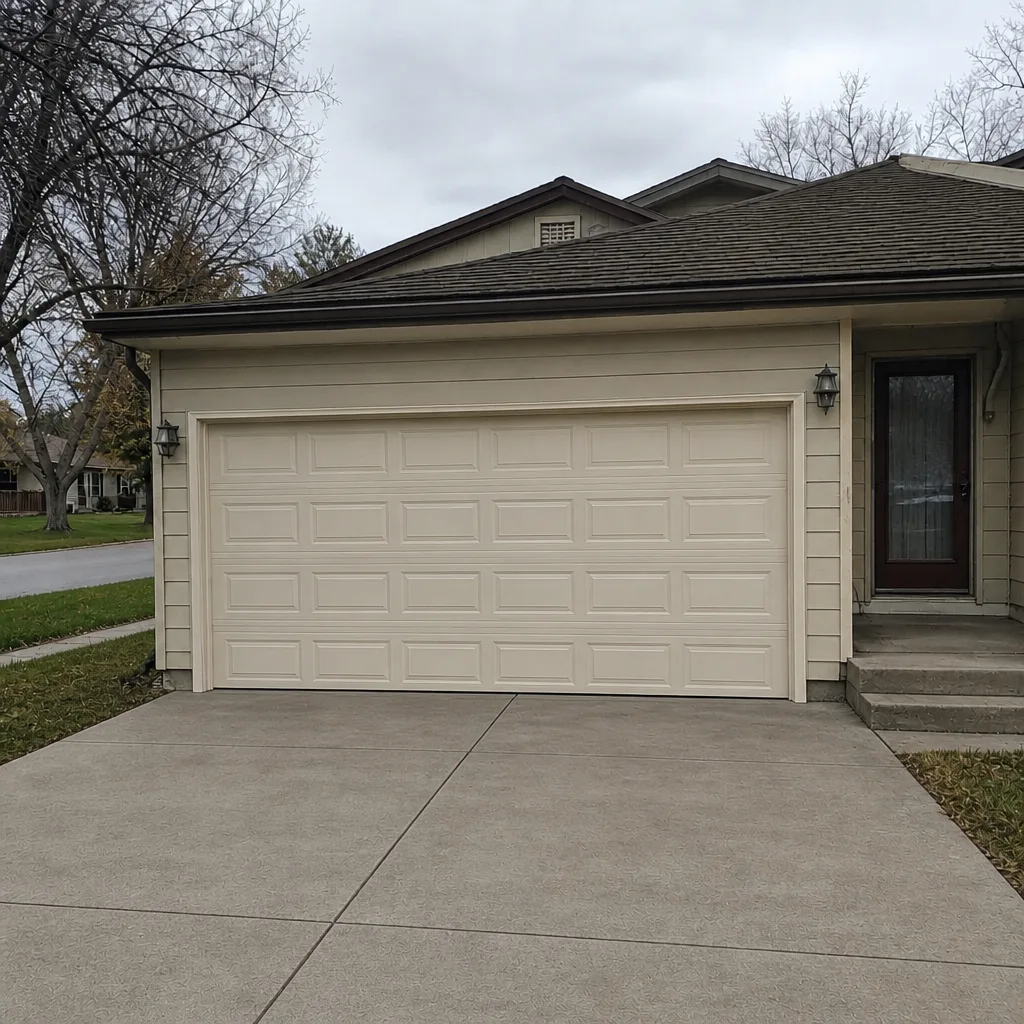 After
When to Call a Professional
Some problems are worth a call even if the door still moves. If your springs are making noise, the door feels heavy or off-balance, a cable is frayed, or the opener runs but the door barely budges, those are diagnostic calls, and early calls save money. If a spring has broken, a cable has snapped, or the door is stuck down with a car inside, call right away. A door stuck closed with a car inside is an access crisis, and the problem often has a cause you can’t see from below.
Eagan Garage Door Repair offers a single call for the whole range of problems, with brand-fluent service on LiftMaster, Chamberlain, Genie, Clopay, Amarr, Wayne Dalton, Craftsman and Raynor equipment. Every price is quoted and agreed before any work starts, and the written estimate sets the final price. Our technicians have up to 12 years of experience and will give you a straightforward answer on whether a repair will hold or a replacement is the better move. Eagan Garage Door Repair offers free estimates in Eagan, so call (844) 643-4886 and get a straight answer.
Frequently Asked Questions
An insulated steel door with a heavier sheet gauge and a thermal break between the skins holds up best in Eagan. Steel handles the freeze-thaw cycle better than wood, and a thicker gauge resists dents from hail and falling snow. Check the gauge and the wind rating before you look at color. Call (844) 643-4886 for a free estimate on options that fit your home.
Often yes, at least in terms of style, color or window configuration. Many Eagan subdivisions along the Lexington-Diffley corridor and the newer Lakeville-border developments carry design rules that reach the garage door, so read your association’s guidelines and get written approval before you order. A replacement should match your subdivision as well as your house. Call (844) 643-4886 and we’ll talk through options that work for your rules.
Under about 8 to 10 years old, a panel swap usually makes sense if the hardware is sound. Around 12 to 15 years, a second round of repairs is where replacement starts to win. Past 15 years, a full replacement is usually the better call, especially if the current door’s wind rating is below today’s requirement. Call (844) 643-4886 for a free estimate and we’ll tell you which makes more sense.
We work on your brand, and that covers the major systems. We service LiftMaster, Chamberlain, Genie, Clopay, Amarr, Wayne Dalton, Craftsman and Raynor equipment, so the recommendation follows what the equipment actually needs. If your brand isn’t on that list, call (844) 643-4886 and we’ll tell you honestly whether we can help.
It’s usually urgent rather than an after-hours emergency. A broken spring leaves the door unusable and can strain the opener or cables if you keep forcing it, so it’s worth scheduling quickly. If the door is stuck down with a car inside or the failure has created a security problem, call (844) 643-4886 right away. We treat that as the access issue it is.
It means the door was likely built to an older standard than what applies to new construction in your area. Ask your city’s building department for the current residential requirement for your address, then compare it against your door’s rating plate. If your door is rated below the current requirement, that’s a reason to think about replacement rather than repair. Call (844) 643-4886 and we’ll help you read the plate and weigh the options.
The Bottom Line
Eagan’s climate, its HOA-heavy developments and its housing stock all push garage door decisions in specific directions. Buy steel with a heavier gauge and a thermal break. Read your HOA’s design rules before you order. Check your ceiling clearance, your wiring and your door’s rating plate before you buy an opener. Know the age threshold where a panel swap stops making sense, and treat the freeze-thaw cycle as a reason to inspect before winter rather than after. And if the springs or cables are involved, stop and call a professional. Our team handles the full range at one call for your Eagan home, with a price agreed before work begins. Call (844) 643-4886 for a free estimate.
Written by the team at Eagan Garage Door Repair.