Top Signs You Need Garage Door Service – Don’t Ignore These
A garage door that opens slower in January than it did in October isn’t showing normal seasonal behavior. It’s showing you that your spring tension is off, and that tension gap is what snaps springs during the first hard use of the day. Most failures announce themselves long before anything breaks. The trouble is that homeowners learn to tune out the sounds, the lag, and the slight lean until a repair turns into a replacement. Here’s how to read what your door is telling you, and where early service saves real money.
If you’d rather not climb around under a loaded spring to investigate, call (844) 643-4886 and we’ll take a look.
Why Most Garage Door Failures Give Warning First
A garage door is a linked system. Springs balance the weight, cables transfer the load, rollers ride the track, and the opener supplies only a fraction of the force needed to lift the door. When one part drifts out of spec, the rest of the system compensates, and that compensation shows up as small behavioral changes: a slower start, a louder roll, a door that doesn’t sit level. These are early signals, and they arrive well before the failure itself.
That matters because repair costs climb sharply once a component actually fails. A spring that’s losing tension is a spring replacement. A spring that breaks mid-travel can whip a cable loose, bend a track, or leave the door hanging at an angle that needs a full torsion rebuild. Catching the warning at the cheap end is the whole game.
Here’s what the early stage usually looks like in Eagan, where cold snaps stress a torsion system harder than steady mild weather does.
- Opening speed that changes with temperature
- Intermittent opener reversals in cold weather
- New noises that weren’t there last season
- A door that stops level but doesn’t stay level
- Visible wear at hinges, rollers, cables, or drums
Key takeaways: a balance test twice a year catches spring wear early; cold-weather opener reversals usually point at springs, not the board; visual inspection works best in a fixed order; and some conditions cross the line from “watch it” to “stop using the door.”
The Balance Test Every Eagan Homeowner Should Do Twice a Year
This is the single most useful check you can run, and it takes under a minute. Close the door, pull the opener release cord so the door is disconnected from the motor, then lift the door by hand to about waist height and let go. A healthy door holds its position or drifts only slightly. A door that slides down a few inches on its own is telling you the springs have lost tension, and the load is now heavier than the balance system was set for.
That one-inch drift is the signal that matters. It means the springs are working harder to lift a door they were tuned for when new, and the extra load lands on the opener and cables. The opener was never designed to lift the full weight of the door. When spring tension fades, the opener starts doing work it isn’t built for, and the failure that follows usually shows up at the worst time: the first cold morning of a hard freeze.
Run the test in spring and again in fall, especially if you’re in a part of Eagan where the door faces the wind and takes the worst of the temperature swing. If the door drops, don’t adjust the springs yourself. Torsion springs are under extreme load and can cause serious injury if handled without the right tools and training. Leave the tension work to a technician and flag it for garage door spring repair before it decides the timing for you.
Why Intermittent Opener Reversals in Cold Weather Usually Point at Springs
When a door opens partway and reverses on its own in cold weather, the instinct is to blame the opener’s logic board. That diagnosis is often wrong, and it can cost you two hundred dollars or more on a board you didn’t need. Cold thickens lubricant, stiffens cables, and lowers spring tension. The opener reads the extra resistance as an obstruction and reverses to protect the door, which is exactly what it’s supposed to do.
In our experience, the pattern is the giveaway. A failing logic board tends to act up at random, in any weather. A spring that’s lost tension reverses mostly when it’s cold, and often on the first few cycles of the morning before the system warms slightly. If your Genie or LiftMaster opener reverses on cold mornings but behaves the rest of the day, look at the springs and the door’s balance before you look at electronics.
The same logic applies to a door that opens fine but won’t stay open, or one that reverses when it hits the slightest resistance on the way down. Those are load and balance symptoms, not software problems. Before replacing parts, a technician should run the balance test and check the spring set. That’s why we keep the diagnostic brand-agnostic: a Genie, a Chamberlain, and a Wayne Dalton system all fail the same way when tension is off, and the fix should follow the equipment, not a parts shelf.
Reading the Noises: Track, Roller, or Cable?
“A little louder than usual” is vague on purpose, because it covers three very different problems. The sound tells you which one you’re dealing with, and getting it right early keeps a small fix from growing into a big one.
A high, steady squeal or grind that runs the length of the door’s travel usually points at the track and hinges needing lubrication. Dry metal on metal is loud but forgiving. A little lubricant on the hinges and the track’s moving surfaces quiets it fast.
A rhythmic clunk or rattle that repeats with the door’s movement is more often a worn or cracking roller. The wheel starts to flat-spot or wobble in its housing, and the sound comes back on every rotation. Rollers are cheap to replace and worth catching before a cracked one jumps the track.
A snapping, popping, or twanging sound is the one to take seriously. That’s the sound of a fraying cable or a spring under failing load, and it means stop using the door until someone qualified looks at it. Cables and torsion springs are under heavy tension and can cause serious injury, so this is not a sound to investigate by hand.
If you’re hearing any of these on a Clopay or Amarr door that’s been quiet for years, that’s your cue to book garage door opener repair or a general service call and get it diagnosed before a louder noise follows.
The Visual Inspection Sequence That Actually Works
When you’re trying to trace uneven movement, the order you check things in matters. Working bottom-up through the mechanism, a fixed sequence keeps you from blaming the wrong part. Go in this order:
- Hinges first. Look for loose screws, bent leaves, or wear at the pivot points. A worn hinge shifts the panel alignment and makes the door move unevenly.
- Rollers next. Check for cracks, flat spots, or wheels that wobble in their stems. A bad roller is often the real source of a door that drags on one side.
- Cables after that. Look for fraying, kinks, or slack on either side. Cables should run straight and taut with no loose strands.
- Drums last. Check the cable drums at the top of the door for cable that’s spooled unevenly or wrapped loose.
The reason for the order is simple: hinges and rollers cause most of the uneven-travel complaints, and it’s easy to blame a cable when a worn hinge is the actual culprit. If you reach the drums and see cable wound unevenly, stop using the door and call a technician. Drum and cable work is under high tension and needs proper tools and training.
Running this sequence on your Eagan door a couple of times a year keeps small wear from settling in unnoticed, and it takes maybe ten minutes.
When It’s a Service Call vs. a Safety Liability
Some problems can wait for a scheduled appointment. Others mean the door should come out of service today. The line between them is worth knowing clearly.
Schedule service soon when the door is louder than usual, runs a little slower, or has a hinge or roller that’s showing early wear. These are maintenance-level issues and rarely threaten anyone.
Stop using the door now when any of these are true:
- A spring has visibly broken or the door won’t lift at all
- A cable is frayed, snapped, or hanging loose
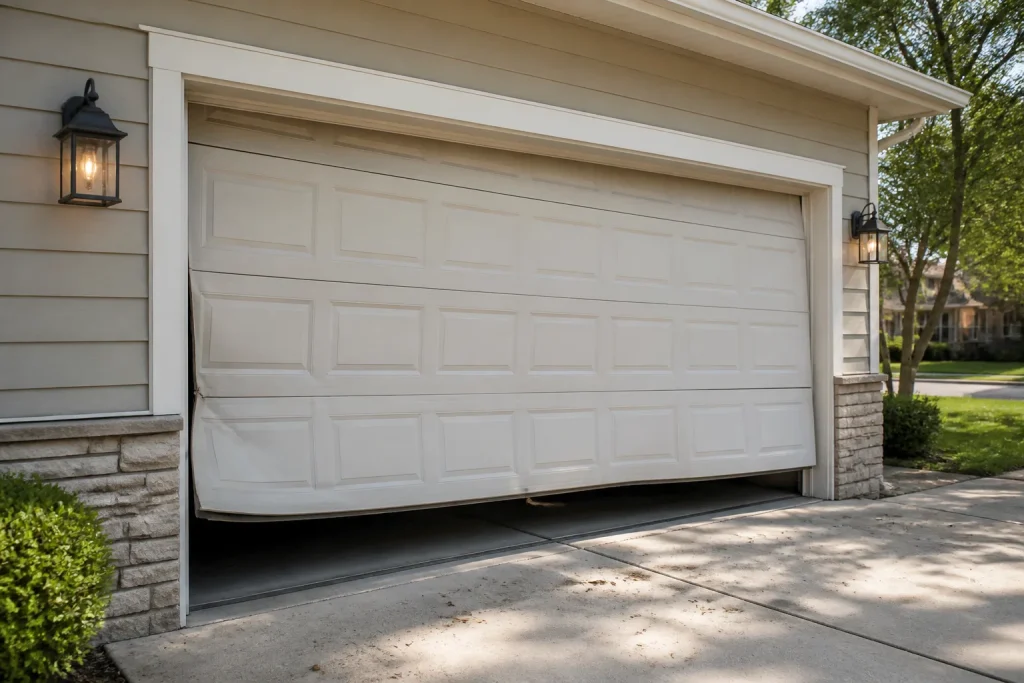
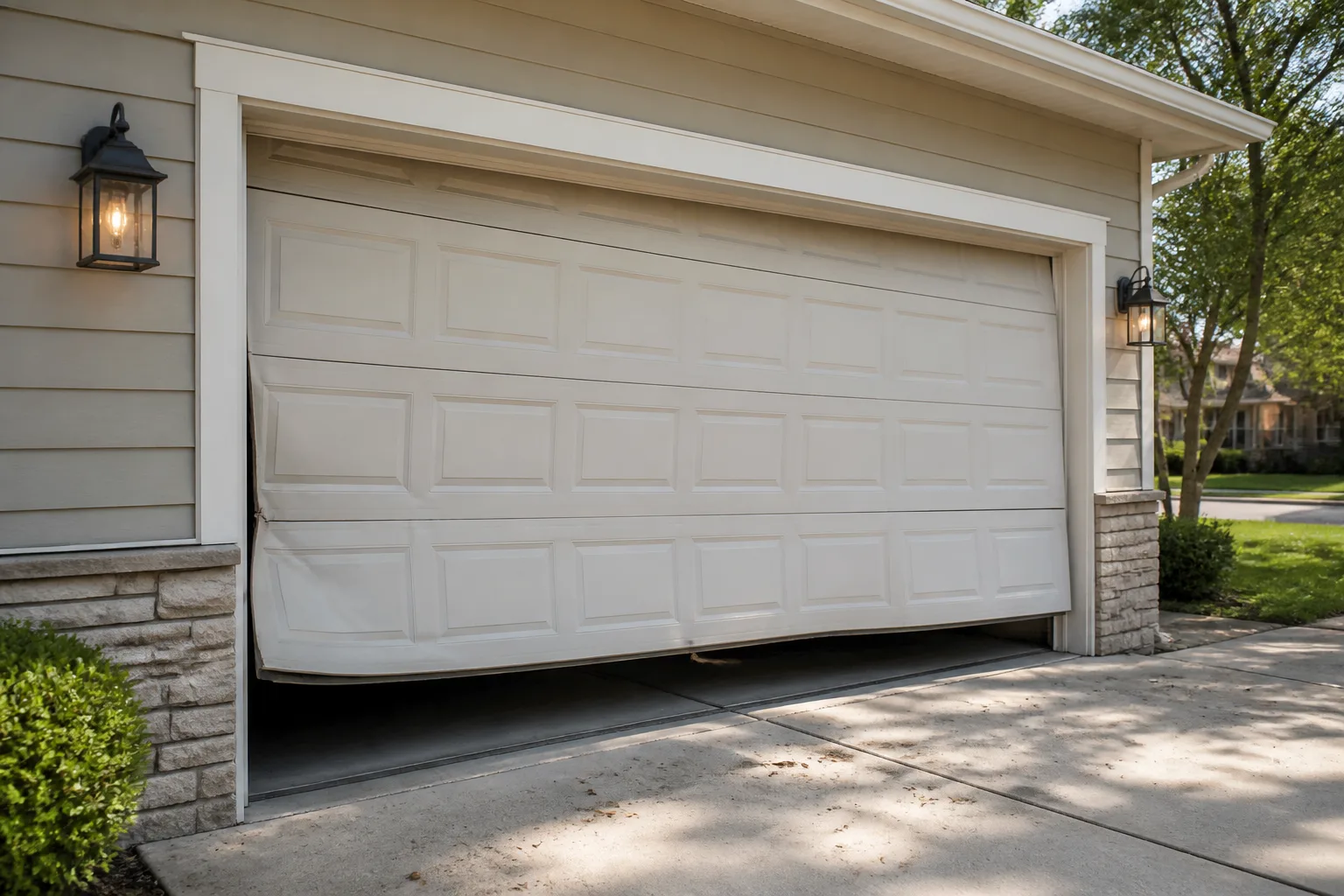
- The door came off one track or is hanging at an angle
- The door drops fast or free-falls when released
- You see a gap that a person or animal could get through
Those conditions cross from maintenance into safety. A door that’s off its track or free-falling can injure someone standing under it, and a door that won’t close securely leaves your home exposed. That’s exactly the situation emergency service exists for, and we treat it as the genuine safety issue it is rather than a reason to add a premium to the bill.
If you’re unsure which side of the line you’re on, call and describe what you’re seeing. A quick conversation usually settles it, and we can book a same-day visit when the situation calls for one.
The Bottom Line
Your garage door rarely fails without telling you first. The slower open in cold weather, the intermittent reversal, the new noise on the track, the drift in the balance test: each is a system signal, and each is far cheaper to address now than after a spring snaps or a cable lets go. Run the balance test twice a year, inspect in the hinge-to-drum order, and treat cables, springs, and off-track doors as stop-now conditions. The rest you can schedule at your convenience.
We service equipment from Genie, Clopay, Amarr, and Wayne Dalton among the major brands, so the technician who arrives already knows your system and quotes on what it actually needs. If you’re in Eagan and need help, Eagan Garage Door Repair offers free estimates. Call (844) 643-4886 and we’ll take a look, or visit Eagan Garage Door Repair to see what we cover. For a focused repair, start with garage door repair in Eagan.
Frequently Asked Questions
If the door still lifts, balances, and closes securely, it usually needs maintenance like lubrication or a roller replacement. If it free-falls, comes off a track, has a broken spring, or a frayed cable, it needs repair and should come out of service until a technician sees it. When in doubt, run the balance test first: a door that drifts down on its own needs repair, not just a tune-up.
That pattern usually means the springs have lost tension, and the cold is increasing resistance enough that the opener reads it as an obstruction and reverses. It’s rarely a logic board. A balance test and a spring inspection will confirm it, and fixing the tension is far cheaper than replacing an opener board you didn’t need. Call (844) 643-4886 for a same-day check if it keeps happening.
Light lubrication on the track and hinges is a reasonable DIY task. Replacing rollers is doable for some homeowners, but you should never touch the springs, cables, or drums yourself. Those parts are under heavy tension and can cause serious injury. If you’re unsure which part is squeaking, have a technician trace it rather than guessing.
Stop using it today if a spring is broken, a cable is frayed or snapped, the door is off its track or hanging at an angle, or it free-falls when you release it. Any of those is a safety liability, not a maintenance item. Call us and describe what you’re seeing, and we’ll tell you whether it’s safe to operate until we arrive.
Written by the team at Eagan Garage Door Repair.
Need Garage Door Help?
Call Eagan Garage Door Repair - the local pro we connect you with is licensed and insured, here with fast after-hours help in Eagan.
(844) 643-4886